
Review
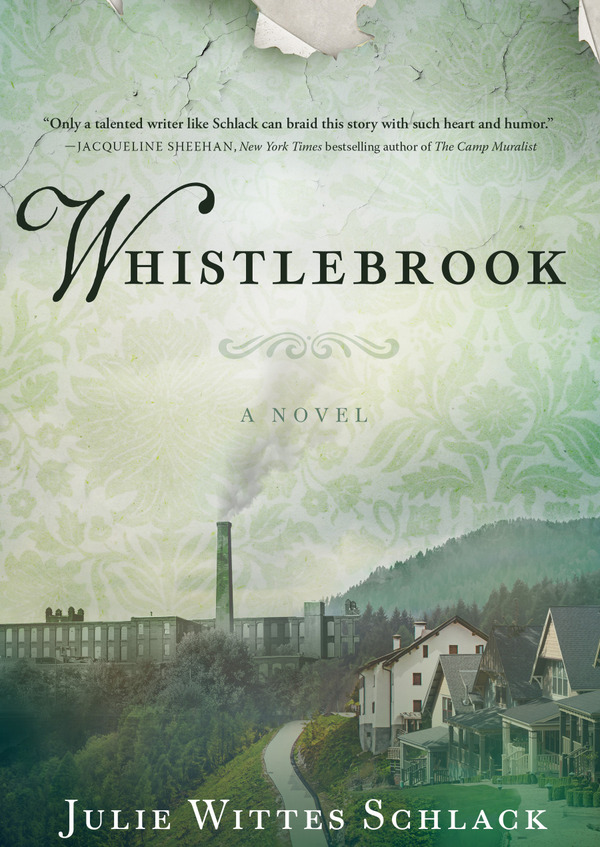
Whistlebrook
A Novel
by Julie Wittes Schlack
Koehler Books. 12-08-2026. Paperback. 251 pp. ISBN 9798897473700. $28.95
When middle-aged Sam Myler comes to live in Whistlebrook, he finds his experiences mirror those whose 1840s letters he reads.
Sam Myler is 59, newly out of work as a PR director, and offered a proposition. When his oldest friend Patty talks him into splitting a unit at Whistlebrook Green, a sustainable Massachusetts condo complex, he goes along mostly as an attempt to try something new; he’s not feeling particularly rooted to his current life as a divorcee. Life is immediately made exciting with the discovery of a 180-year-old skeleton on the site of the Whistlebrook Association, an abolitionist utopian community. Sam passes the time as a volunteer at the local historical society and is soon absorbed by a donated collection of letters between silk-mill founder James Connor and his wife, Constance.
Schlack (This All-at-Onceness and Burning and Dodging) alternates Sam’s first-person narration with the intriguing stream of information in the 1840s letters, and the parallels drive the book. Whistlebrook’s ideals strain under money, ambition, and fatigue. Meanwhile, Sam’s neighbors fight over climate migrants camped in the woods, a developer who is eyeing conservation land, and whether a homeowners’ association can ever be a community. Sam’s voice, the strongest element of the book, is self-deprecating and funny, and the letters paint an enthralling historical fiction story within a story from the point of view of James, Constance, and their daughter, Abby. Aptly, Sam compares one letter from Abby to something out of Little Women. An early letter about boiling maple sap turns neatly into a question about concentrating a community’s convictions. The research is solid and, as the author’s note explains, grounded in real letters and people from that time.
The middle section is slowed by long stretches of debate over council meetings, potluck politics, and regenerative farming, with characters serving as mouthpieces for current politics and sometimes coming off as didactic. However, some of the characters that might be seen as one-dimensional in real life (such as the love interest, Jane, who clashes with Sam when she mentions wanting to live off the land and not rely on Western medicine and expertise) are given more of a chance to be who they are amidst the world of today and Sam’s expectations. The relationship with his daughter that gets some page time towards the end is a standout part of the story.
Recommended for readers who enjoy witty dialogue, high ideals, and current commentary with their historical fiction. This makes for a short book club pick that will make up for its brevity with lengthy discussion.
Reader & Market Readiness Ratings
- Reader Appeal★★★★☆
- Shelf Readiness★★★★☆
- Professional Polish★★★★☆
- Audience Fit★★★★☆
- Discovery Potential★★★☆☆
- Review-ready Language★★★★☆
- Book-club Potential★★★★★
Book Details
- Author
- Julie Wittes Schlack
- Format
- Paperback
- Pages
- 251
- Publisher
- Koehler Books
- List price
- $28.95
- ISBN
- 9798897473700
- Category
- Fiction
- KeywordsAuthor-provided
- intentional communities, utopian communities, historical fiction, Abolitionism, climate fiction
- Publication date
- 12-08-2026
- Language
- English
- Genres
- Literary/General Cultural Heritage, Literary/General Family Life